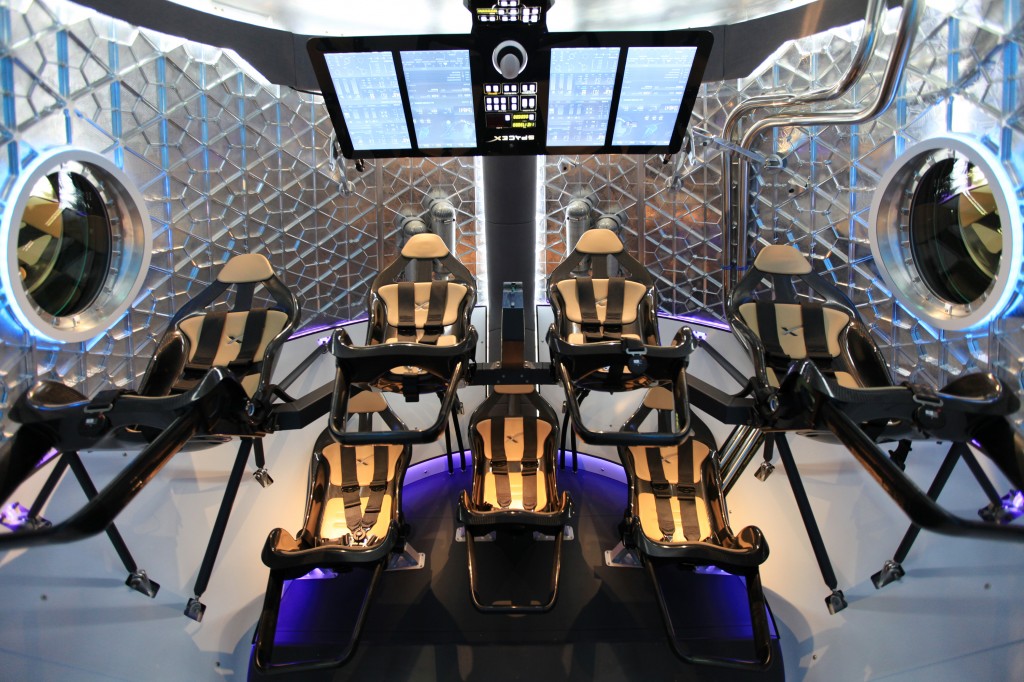
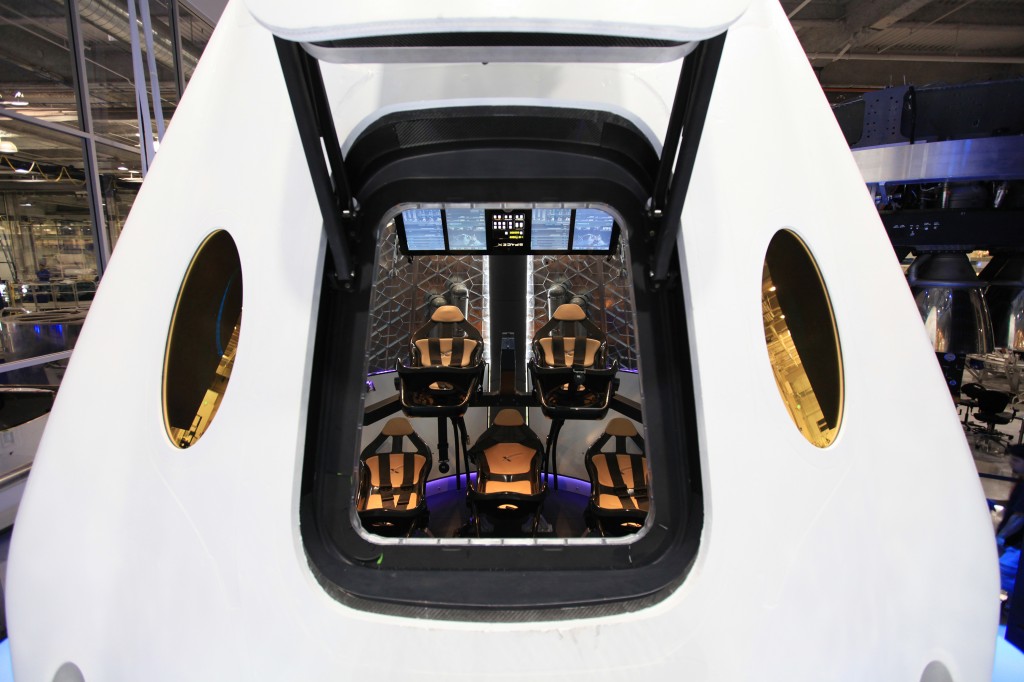
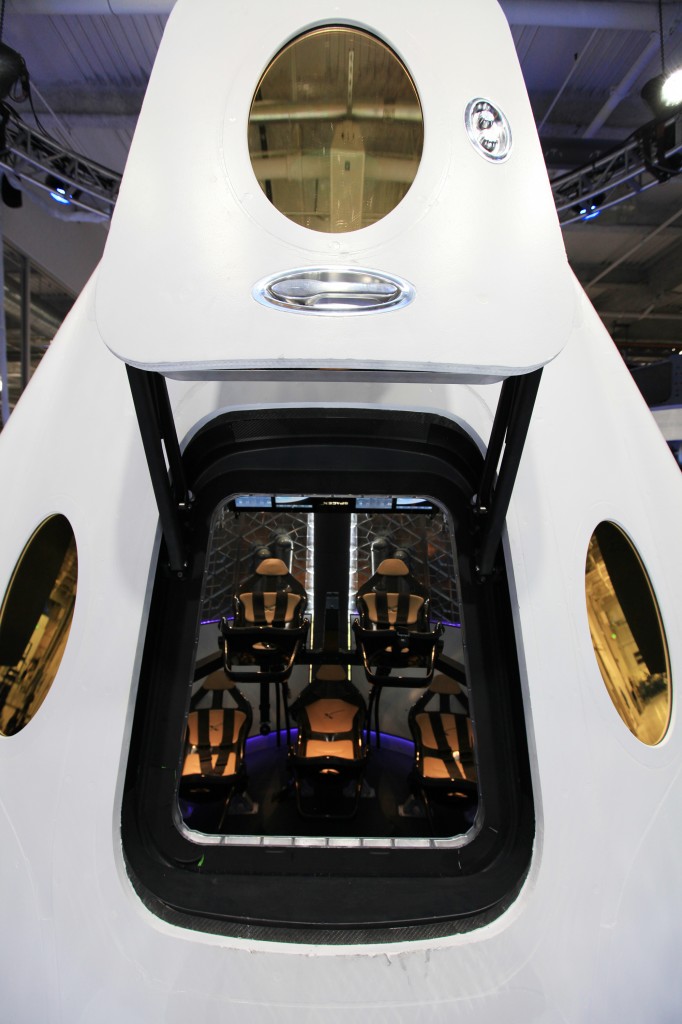
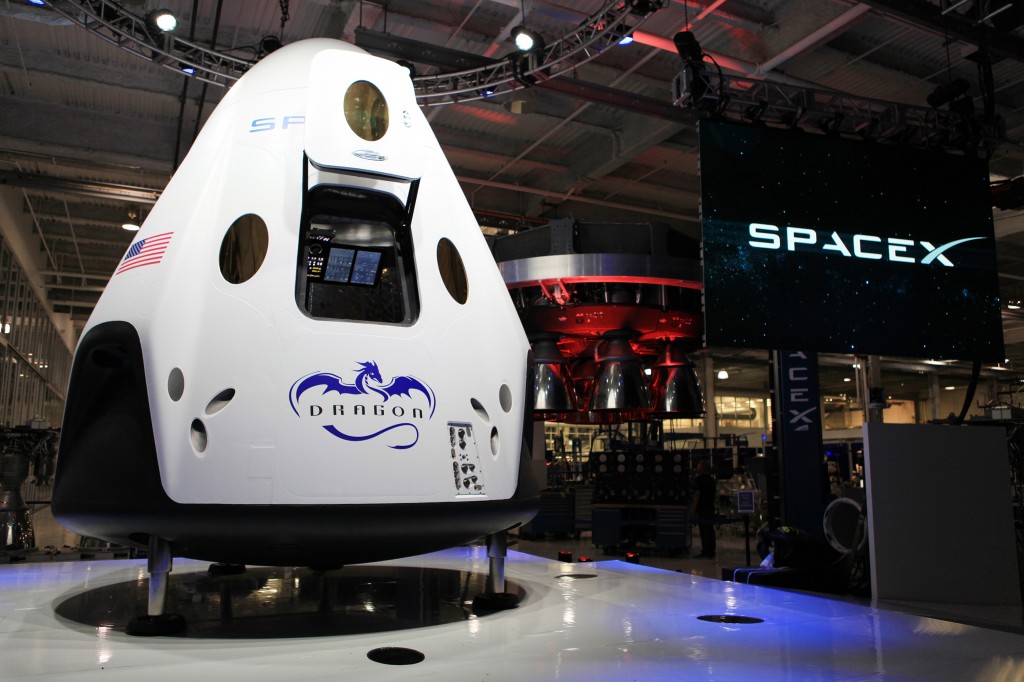
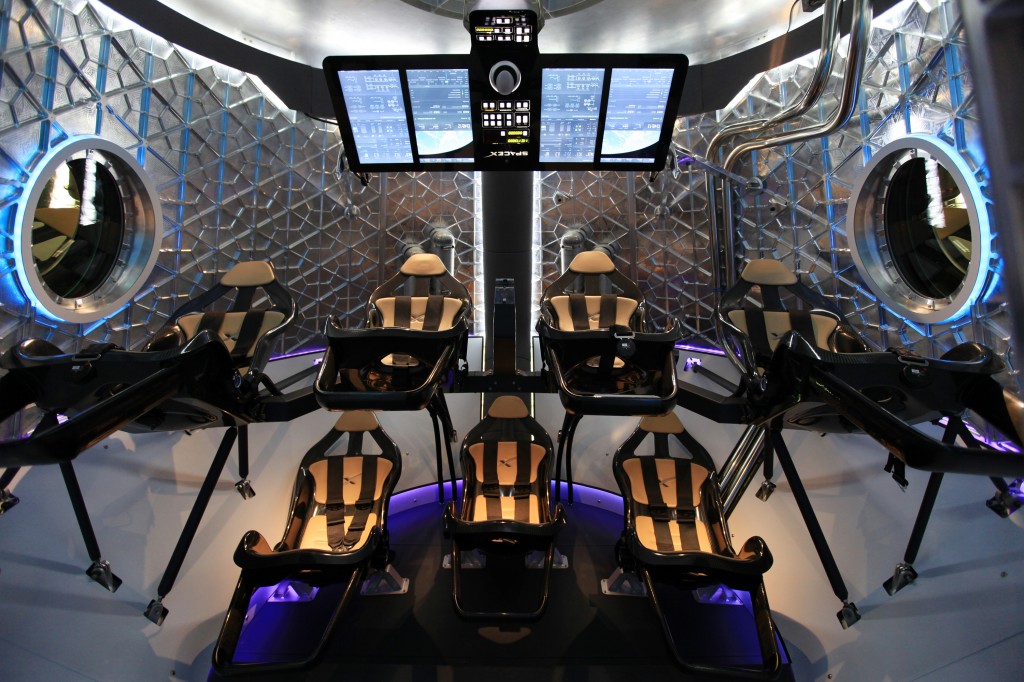
A look through the open hatch of the Dragon V2 reveals the layout and interior of the seven-crew capacity spacecraft. SpaceX unveiled the new spacecraft during a ceremony at its headquarters in Hawthorne, Calif. The Dragon V2 is designed to carry people into Earth’s orbit and was developed in partnership with NASA’s Commercial Crew Program under the Commercial Crew Integrated Capability agreement. SpaceX is one of NASA’s commercial partners working to develop a new generation of U.S. spacecraft and rockets capable of transporting humans to and from Earth’s orbit from American soil. Ultimately, NASA intends to use such commercial systems to fly U.S. astronauts to and from the International Space Station. Photo credit: NASA/Dimitri Gerondidakis
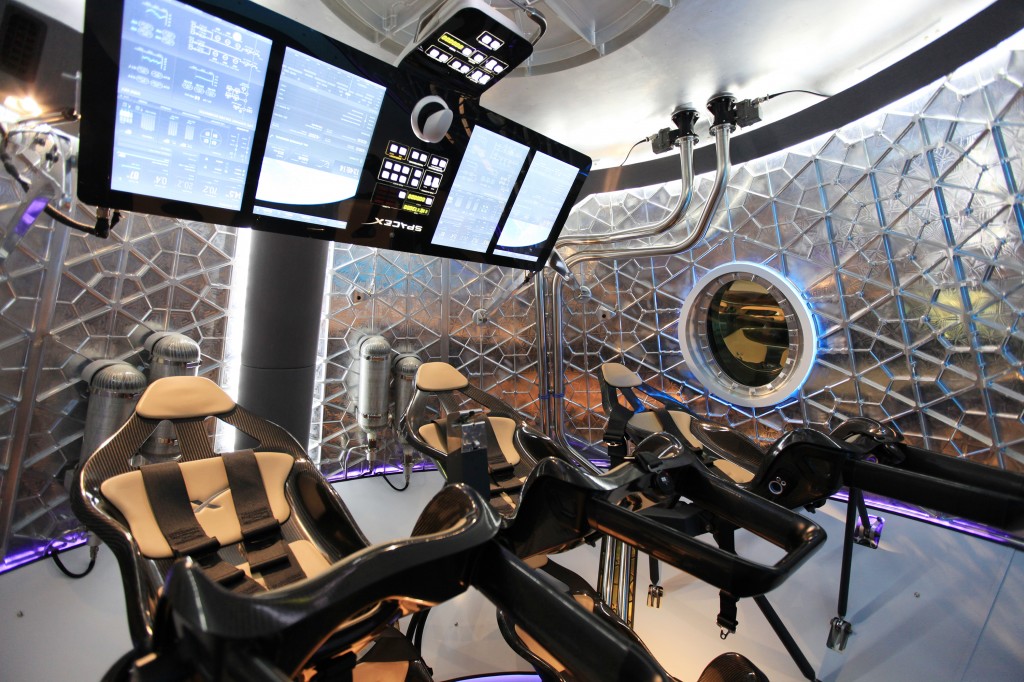
The Dragon V2 spacecraft’s seating arrangement with the control panel swung up to allow crewmembers to get into their seats. Once the crew is in place, the control panel swings down and locks in launch position. SpaceX unveiled the new spacecraft during a ceremony at its headquarters in Hawthorne, Calif. The Dragon V2 is designed to carry people into Earth’s orbit and was developed in partnership with NASA’s Commercial Crew Program under the Commercial Crew Integrated Capability agreement. SpaceX is one of NASA’s commercial partners working to develop a new generation of U.S. spacecraft and rockets capable of transporting humans to and from Earth’s orbit from American soil. Ultimately, NASA intends to use such commercial systems to fly U.S. astronauts to and from the International Space Station. Photo credit: NASA/Dimitri Gerondidakis
A look through the open hatch of the Dragon V2 reveals the layout and interior of the seven-crew capacity spacecraft. SpaceX unveiled the new spacecraft during a ceremony at its headquarters in Hawthorne, Calif. The Dragon V2 is designed to carry people into Earth’s orbit and was developed in partnership with NASA’s Commercial Crew Program under the Commercial Crew Integrated Capability agreement. SpaceX is one of NASA’s commercial partners working to develop a new generation of U.S. spacecraft and rockets capable of transporting humans to and from Earth’s orbit from American soil. Ultimately, NASA intends to use such commercial systems to fly U.S. astronauts to and from the International Space Station. Photo credit: NASA/Dimitri Gerondidakis
A look through the open hatch of the Dragon V2 reveals the layout and interior of the seven-crew capacity spacecraft. SpaceX unveiled the new spacecraft during a ceremony at its headquarters in Hawthorne, Calif. The Dragon V2 is designed to carry people into Earth’s orbit and was developed in partnership with NASA’s Commercial Crew Program under the Commercial Crew Integrated Capability agreement. SpaceX is one of NASA’s commercial partners working to develop a new generation of U.S. spacecraft and rockets capable of transporting humans to and from Earth’s orbit from American soil. Ultimately, NASA intends to use such commercial systems to fly U.S. astronauts to and from the International Space Station. Photo credit: NASA/Dimitri Gerondidakis
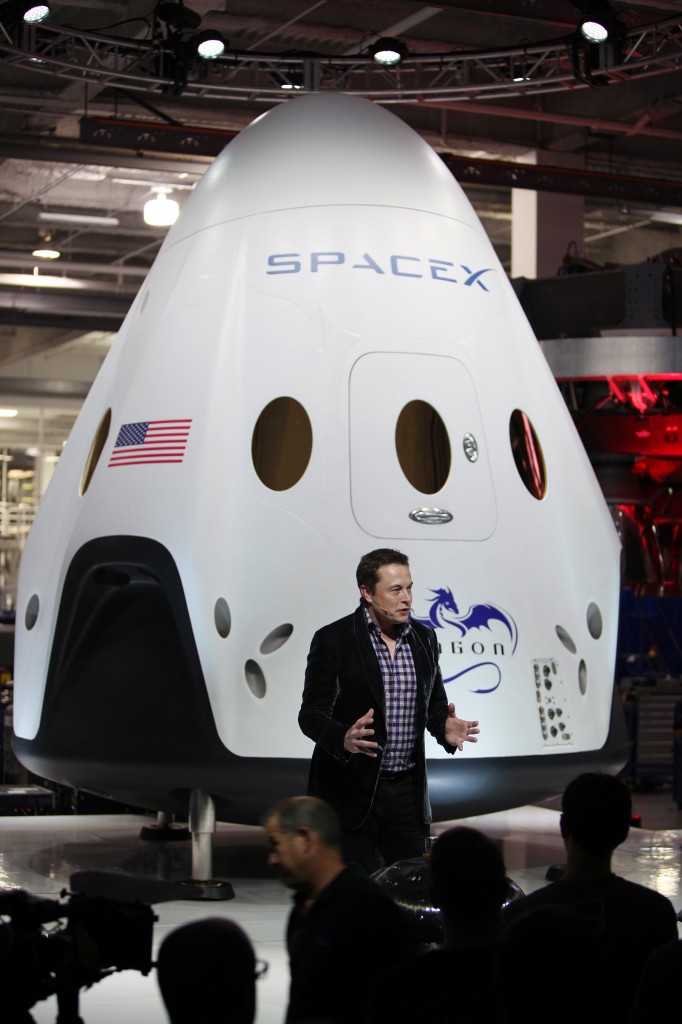
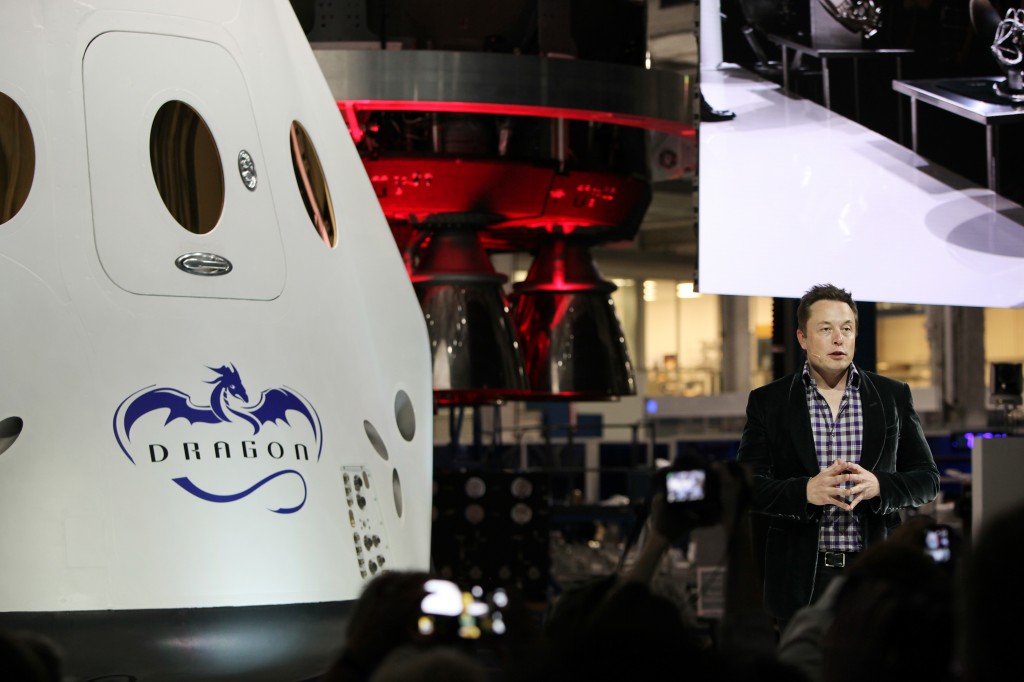
SpaceX CEO and founder Elon Musk unveils the Dragon V2 during a ceremony for the new spacecraft inside SpaceX headquarters in Hawthorne, Calif. The spacecraft is designed to carry people into Earth’s orbit and was developed in partnership with NASA’s Commercial Crew Program under the Commercial Crew Integrated Capability agreement. SpaceX is one of NASA’s commercial partners working to develop a new generation of U.S. spacecraft and rockets capable of transporting humans to and from Earth’s orbit from American soil. Ultimately, NASA intends to use such commercial systems to fly U.S. astronauts to and from the International Space Station. Photo credit: NASA/Dimitri Gerondidakis
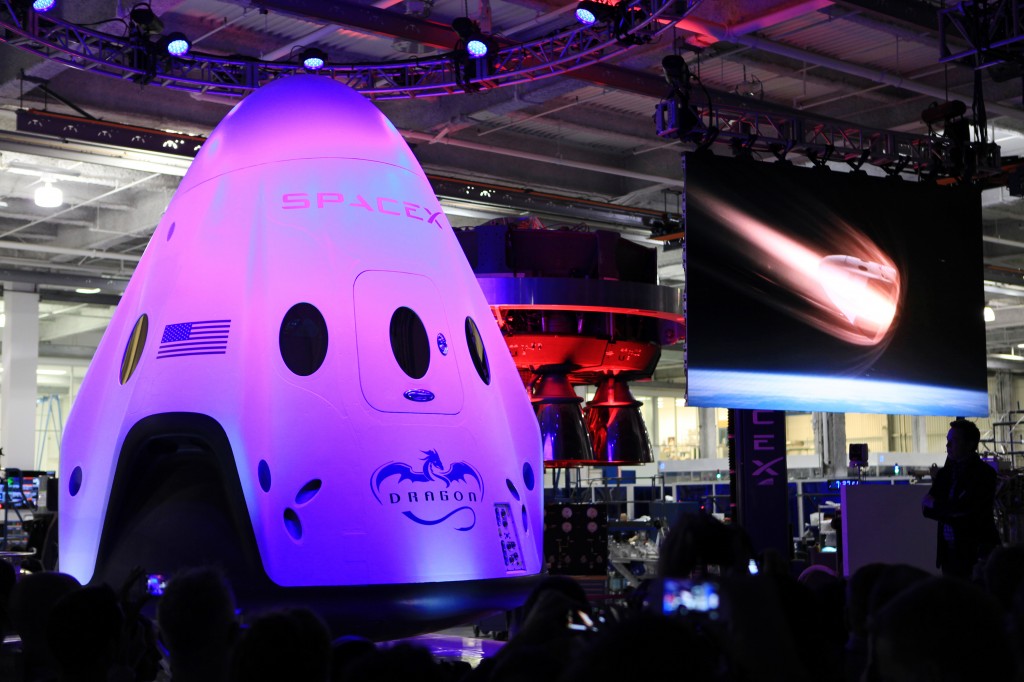
Animation showing the Dragon V2 spacecraft re-entering Earth’s atmosphere plays beside the space during an unveiling ceremony inside SpaceX headquarters in Hawthorne, Calif. The spacecraft is designed to carry people into Earth’s orbit and was developed in partnership with NASA’s Commercial Crew Program under the Commercial Crew Integrated Capability agreement. SpaceX is one of NASA’s commercial partners working to develop a new generation of U.S. spacecraft and rockets capable of transporting humans to and from Earth’s orbit from American soil. Ultimately, NASA intends to use such commercial systems to fly U.S. astronauts to and from the International Space Station. Photo credit: NASA/Dimitri Gerondidakis
SpaceX CEO and founder Elon Musk unveils the Dragon V2 inside SpaceX headquarters in Hawthorne, Calif. The spacecraft is designed to carry people into Earth’s orbit and was developed in partnership with NASA’s Commercial Crew Program under the Commercial Crew Integrated Capability agreement. SpaceX is one of NASA’s commercial partners working to develop a new generation of U.S. spacecraft and rockets capable of transporting humans to and from Earth’s orbit from American soil. Ultimately, NASA intends to use such commercial systems to fly U.S. astronauts to and from the International Space Station. Photo credit: NASA/Dimitri Gerondidakis
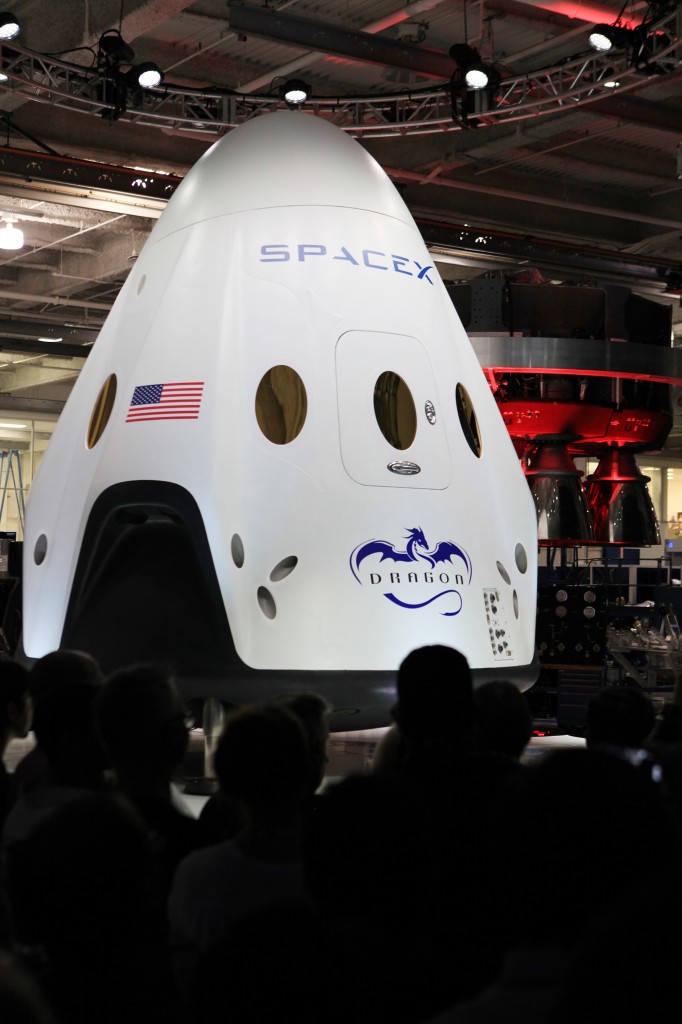
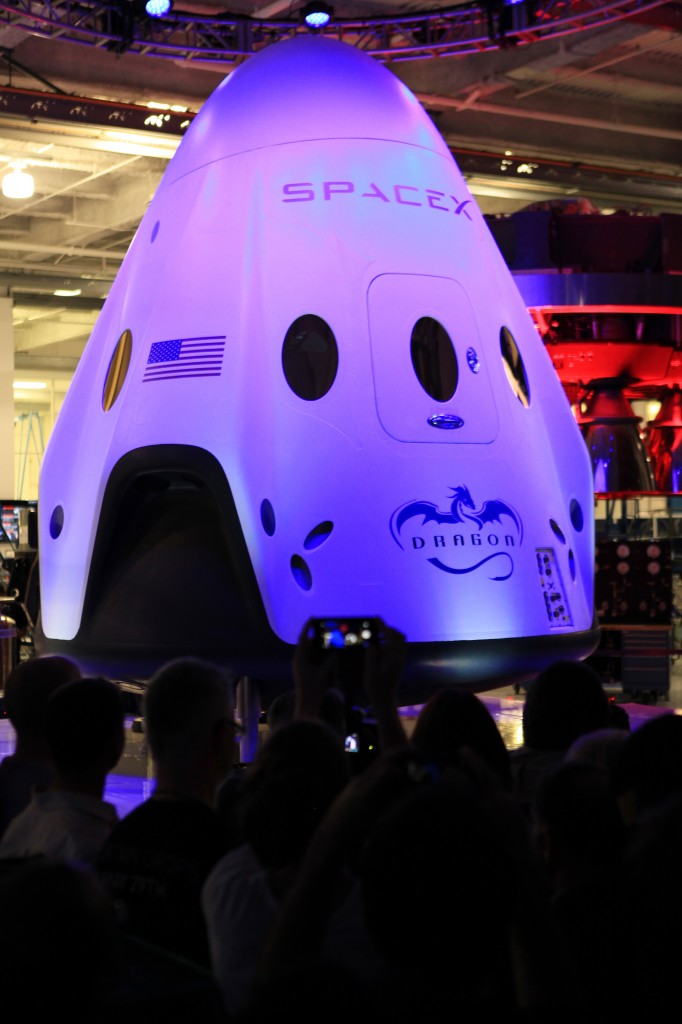
The Dragon V2 stands on a stage inside SpaceX headquarters in Hawthorne, Calif., prior to its unveiling. The spacecraft is designed to carry people into Earth’s orbit and was developed in partnership with NASA’s Commercial Crew Program under the Commercial Crew Integrated Capability agreement. SpaceX is one of NASA’s commercial partners working to develop a new generation of U.S. spacecraft and rockets capable of transporting humans to and from Earth’s orbit from American soil. Ultimately, NASA intends to use such commercial systems to fly U.S. astronauts to and from the International Space Station. Photo credit: NASA/Dimitri Gerondidakis
SpaceX CEO and founder Elon Musk discusses the Dragon V2 during an unveiling ceremony for the new spacecraft inside SpaceX headquarters in Hawthorne, Calif. The spacecraft is designed to carry people into Earth’s orbit and was developed in partnership with NASA’s Commercial Crew Program under the Commercial Crew Integrated Capability agreement. SpaceX is one of NASA’s commercial partners working to develop a new generation of U.S. spacecraft and rockets capable of transporting humans to and from Earth’s orbit from American soil. Ultimately, NASA intends to use such commercial systems to fly U.S. astronauts to and from the International Space Station. Photo credit: NASA/Dimitri Gerondidakis
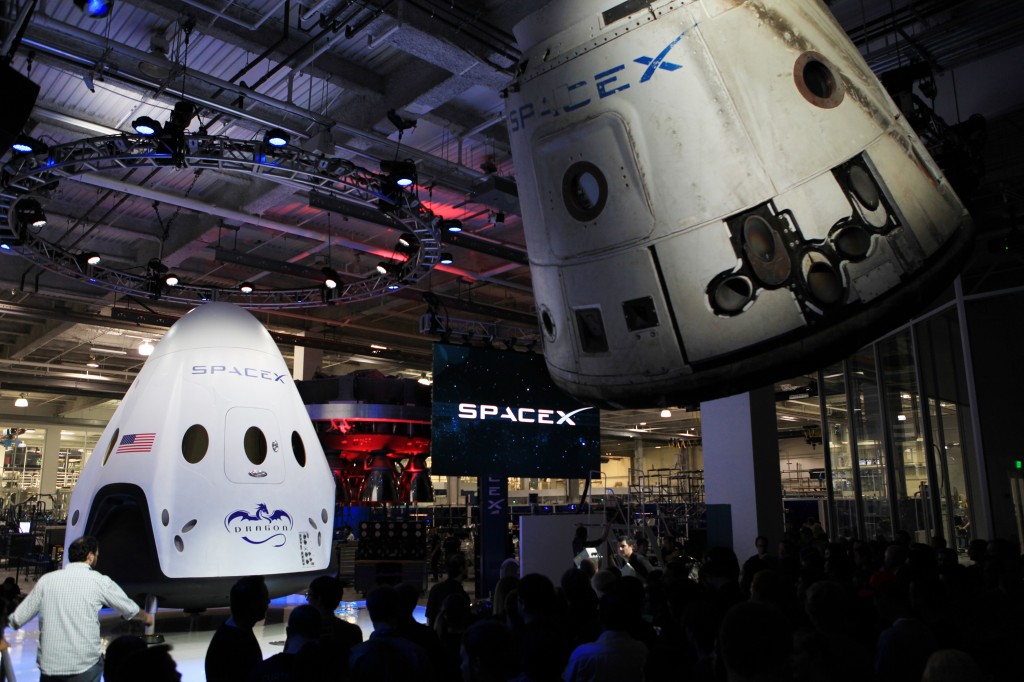
The Dragon V2 stands on a stage inside SpaceX headquarters in Hawthorne, Calif., near a suspended cargo-carrying Dragon spacecraft that flew a previous mission. The new spacecraft, the Dragon V2, is designed to carry people into Earth’s orbit and was developed in partnership with NASA’s Commercial Crew Program under the Commercial Crew Integrated Capability agreement. SpaceX is one of NASA’s commercial partners working to develop a new generation of U.S. spacecraft and rockets capable of transporting humans to and from Earth’s orbit from American soil. Ultimately, NASA intends to use such commercial systems to fly U.S. astronauts to and from the International Space Station. Photo credit: NASA/Dimitri Gerondidakis
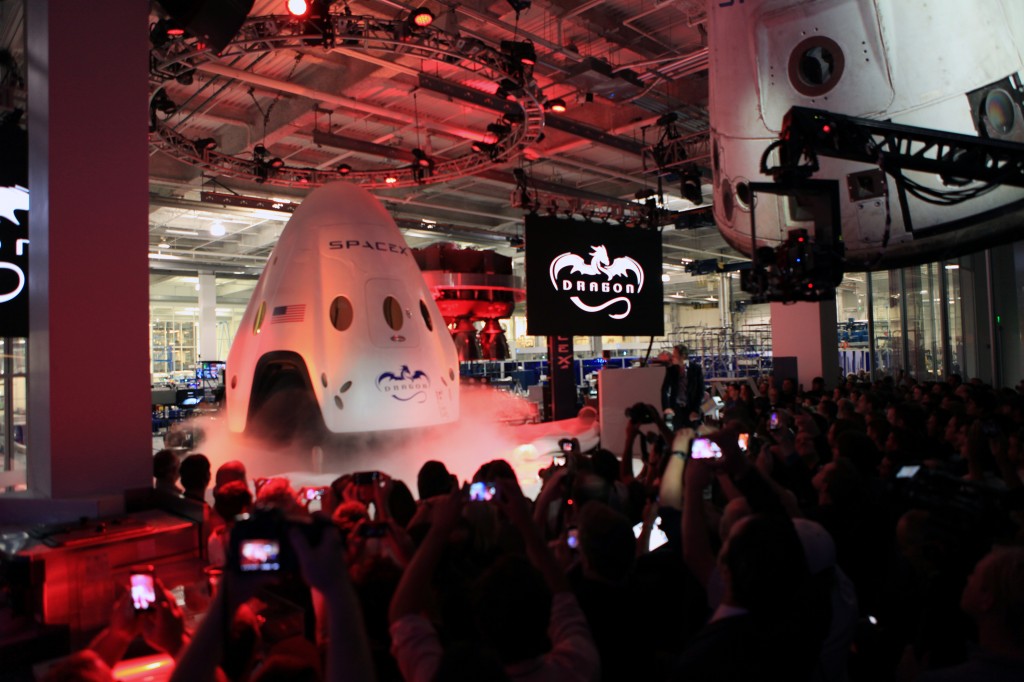
The Dragon V2 stands on a stage inside SpaceX headquarters in Hawthorne, Calif., during its unveiling ceremony. The spacecraft is designed to carry people into Earth’s orbit and was developed in partnership with NASA’s Commercial Crew Program under the Commercial Crew Integrated Capability agreement. SpaceX is one of NASA’s commercial partners working to develop a new generation of U.S. spacecraft and rockets capable of transporting humans to and from Earth’s orbit from American soil. Ultimately, NASA intends to use such commercial systems to fly U.S. astronauts to and from the International Space Station. Photo credit: NASA/Dimitri Gerondidakis
The Dragon V2 stands on a stage inside SpaceX headquarters in Hawthorne, Calif., during its unveiling ceremony. The spacecraft is designed to carry people into Earth’s orbit and was developed in partnership with NASA’s Commercial Crew Program under the Commercial Crew Integrated Capability agreement. SpaceX is one of NASA’s commercial partners working to develop a new generation of U.S. spacecraft and rockets capable of transporting humans to and from Earth’s orbit from American soil. Ultimately, NASA intends to use such commercial systems to fly U.S. astronauts to and from the International Space Station. Photo credit: NASA/Dimitri Gerondidakis
A look through the open hatch of the Dragon V2 reveals the layout and interior of the seven-crew capacity spacecraft. SpaceX unveiled the new spacecraft during a ceremony at its headquarters in Hawthorne, Calif. The Dragon V2 is designed to carry people into Earth’s orbit and was developed in partnership with NASA’s Commercial Crew Program under the Commercial Crew Integrated Capability agreement. SpaceX is one of NASA’s commercial partners working to develop a new generation of U.S. spacecraft and rockets capable of transporting humans to and from Earth’s orbit from American soil. Ultimately, NASA intends to use such commercial systems to fly U.S. astronauts to and from the International Space Station. Photo credit: NASA/Dimitri Gerondidakis
SpaceX CEO and founder Elon Musk unveiled the Dragon V2 during a ceremony for the new spacecraft inside SpaceX headquarters in Hawthorne, Calif. The spacecraft is designed to carry people into Earth’s orbit and was developed in partnership with NASA’s Commercial Crew Program under the Commercial Crew Integrated Capability agreement. SpaceX is one of NASA’s commercial partners working to develop a new generation of U.S. spacecraft and rockets capable of transporting humans to and from Earth’s orbit from American soil. Ultimately, NASA intends to use such commercial systems to fly U.S. astronauts to and from the International Space Station.
The invention of the CubeSat standard by the California Polytechnic State University ushered in a revolution in the utilization and exploration of space by both governmental and civilian users. With a total volume as small as a 1,000 cubic centimeters, cubesats have enabled relatively economical space access for industrial, academic and private organizations that previously […]
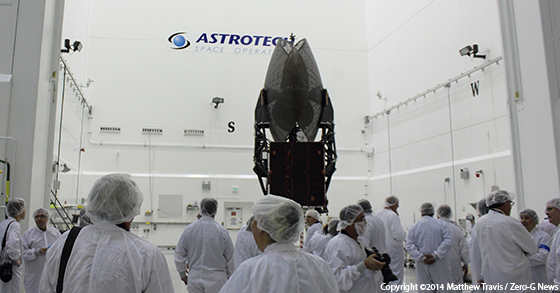
NASA’s Tracking and Data Relay Satellite (TDRS)-L was the focus of a media opportunity Januar 3, at the Astrotech Space Operations facility in Titusville, FL. Media viewed the TDRS-L spacecraft and interviewed project and launch program officials from NASA’s Goddard Space Flight Center in Greenbelt, Md.; the Launch Services Program at the agency’s Kennedy Space […]
Read the story with a full page of launch pad remote camera photos and video! Last month, Zero-G News had the opportunity to travel to Wallops Flight Facility, VA in order to cover the anticipated launch of an Orbital Sciences Corporation Antares rocket to deliver the Cygnus Orb-3 spacecraft on a cargo resupply run to […]