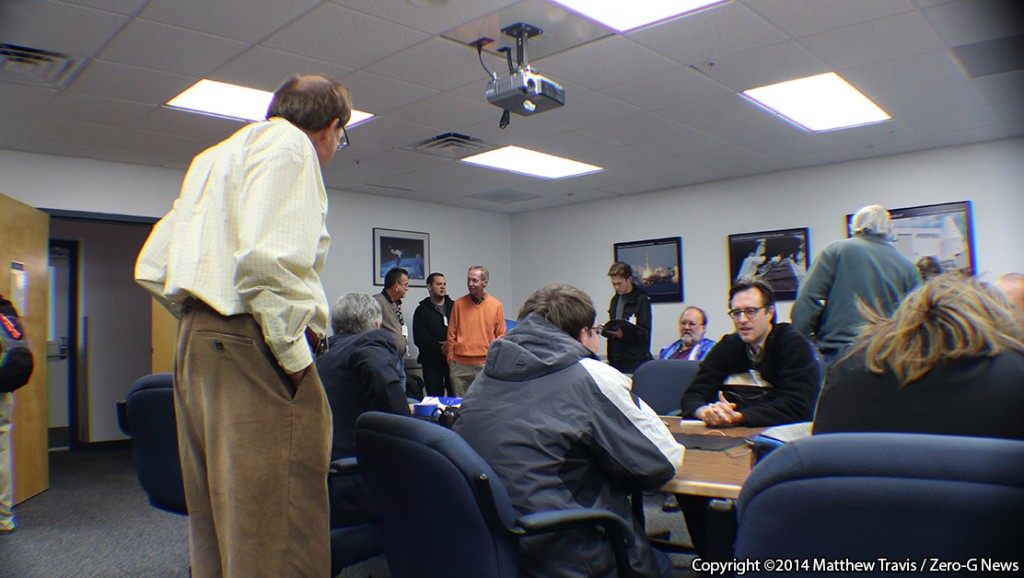
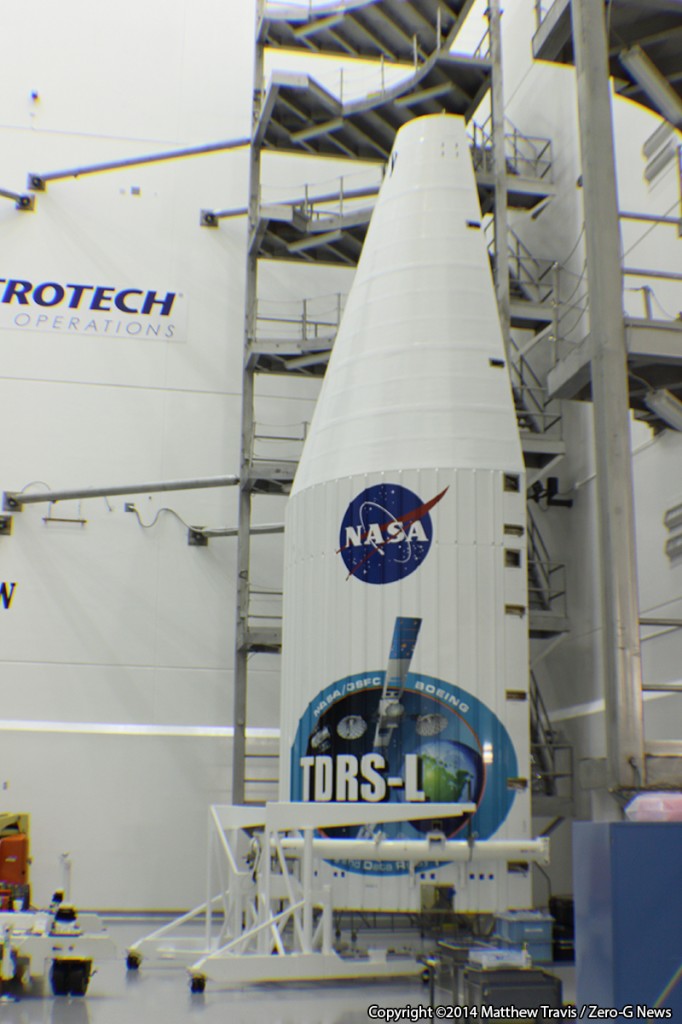
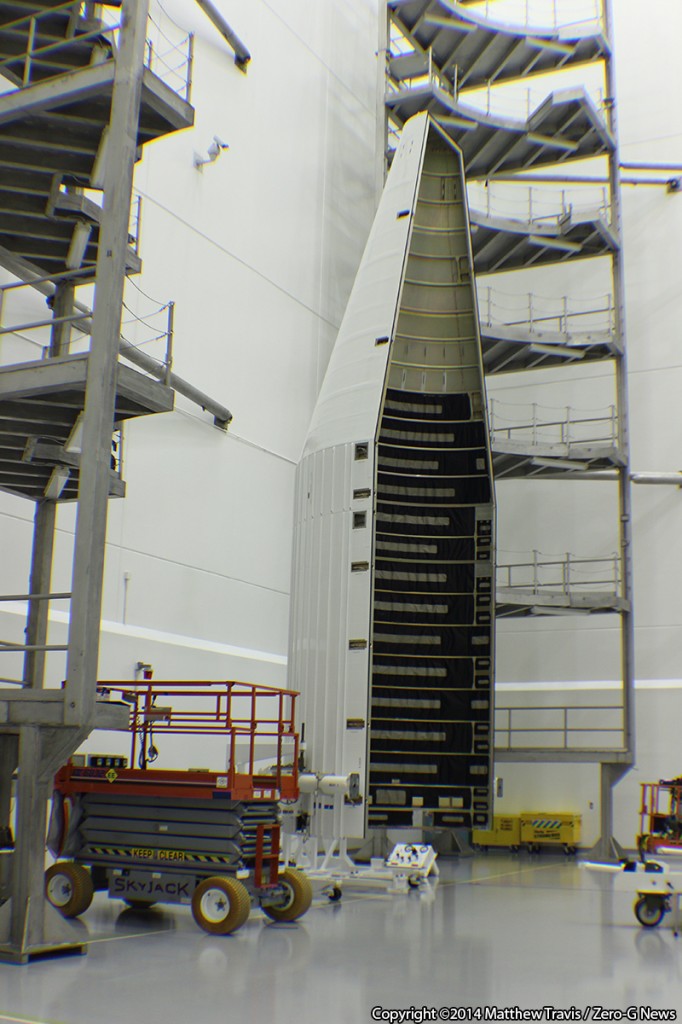
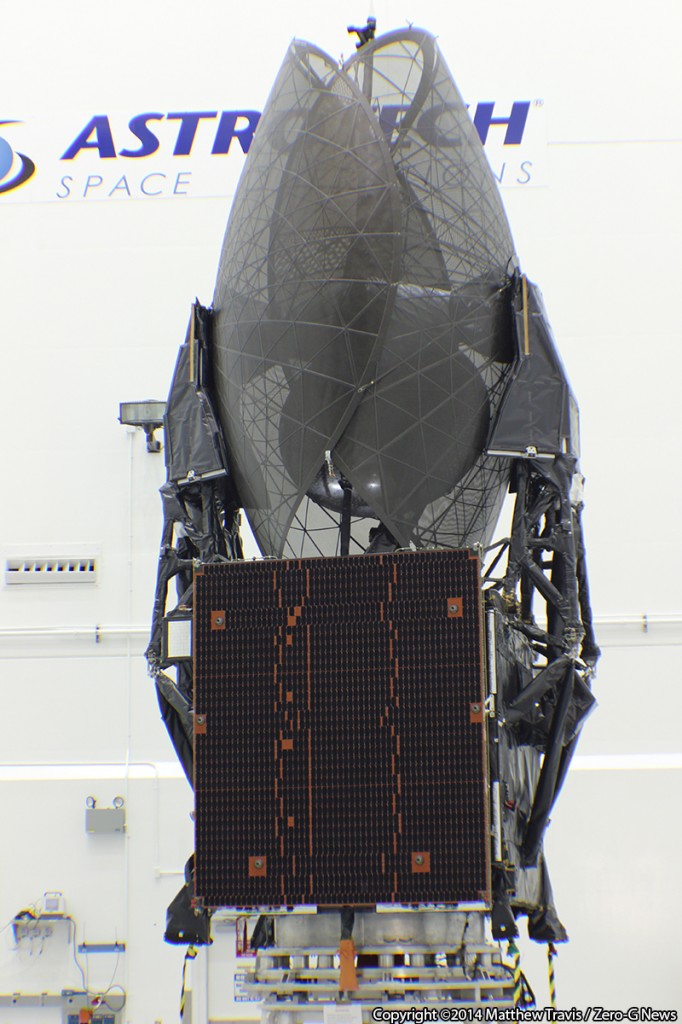
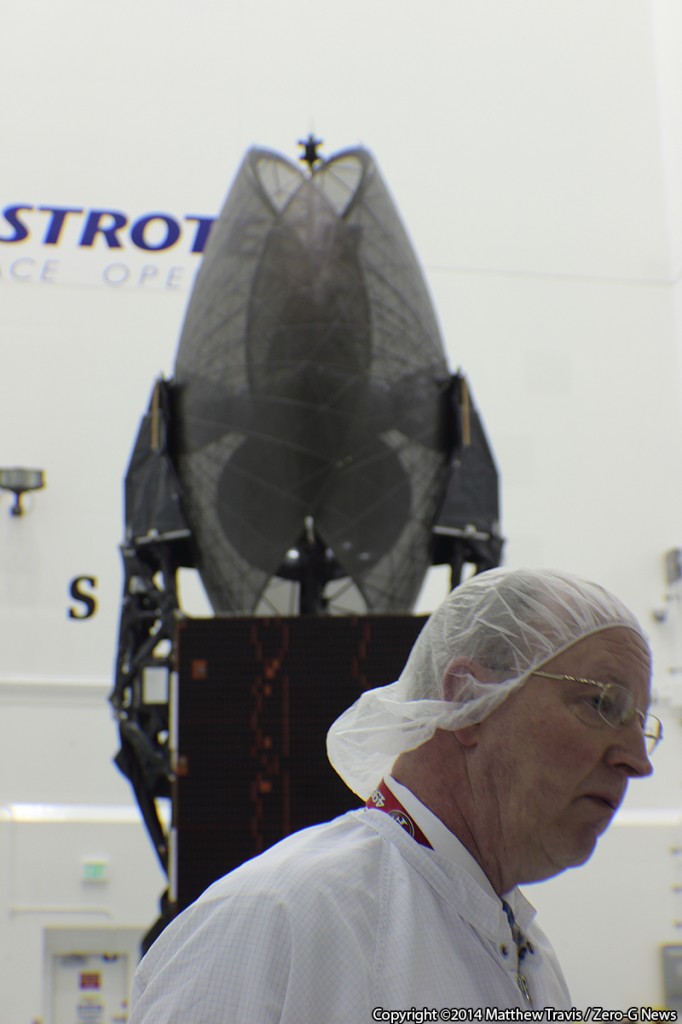
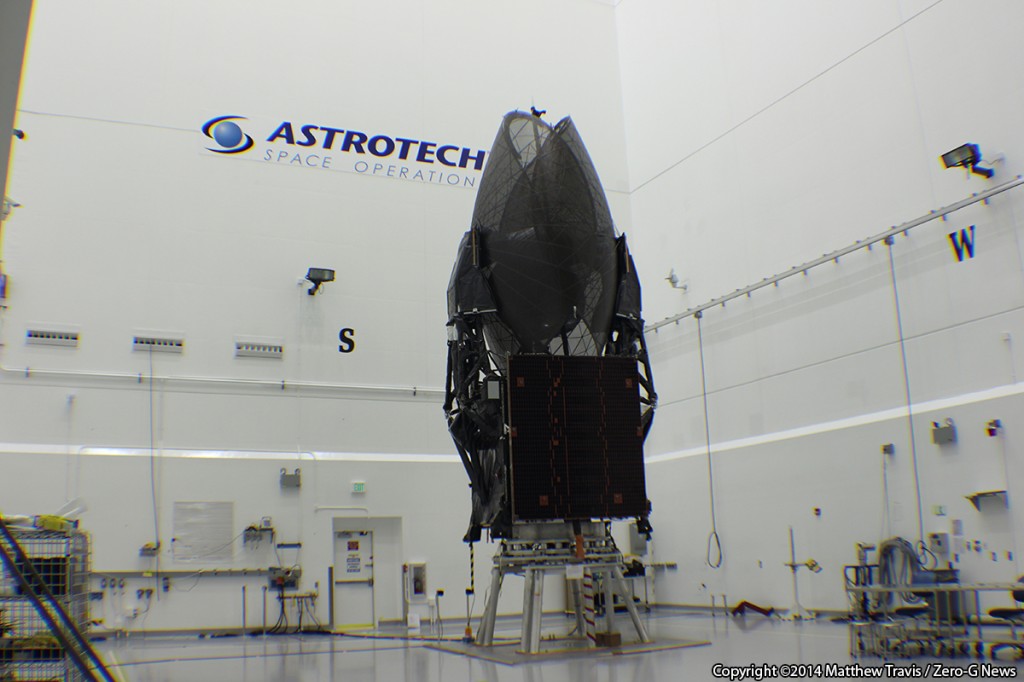
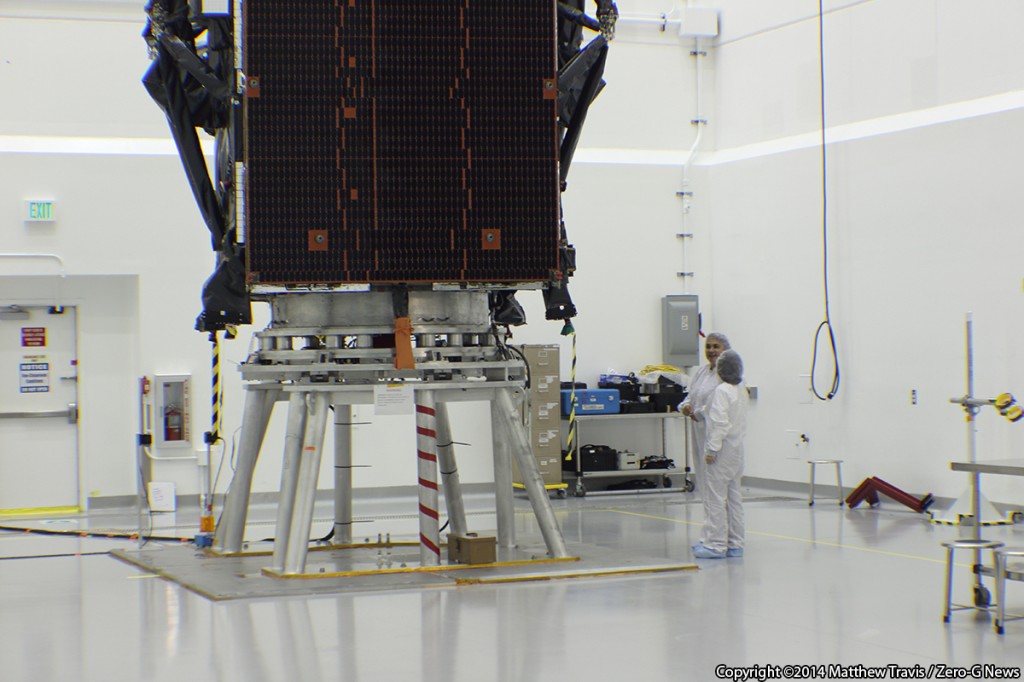
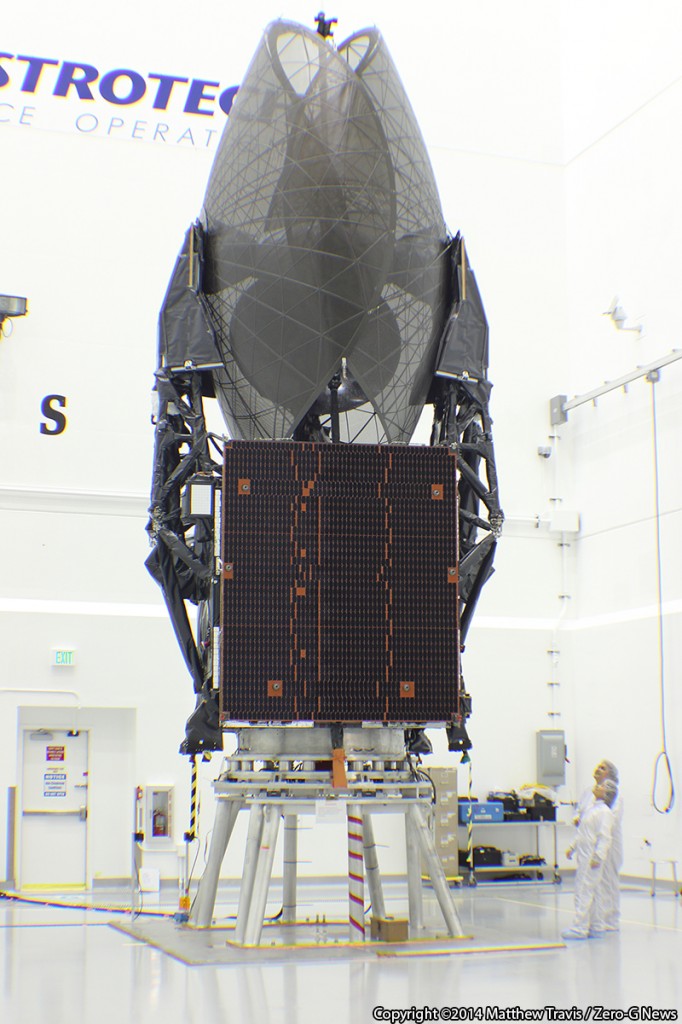
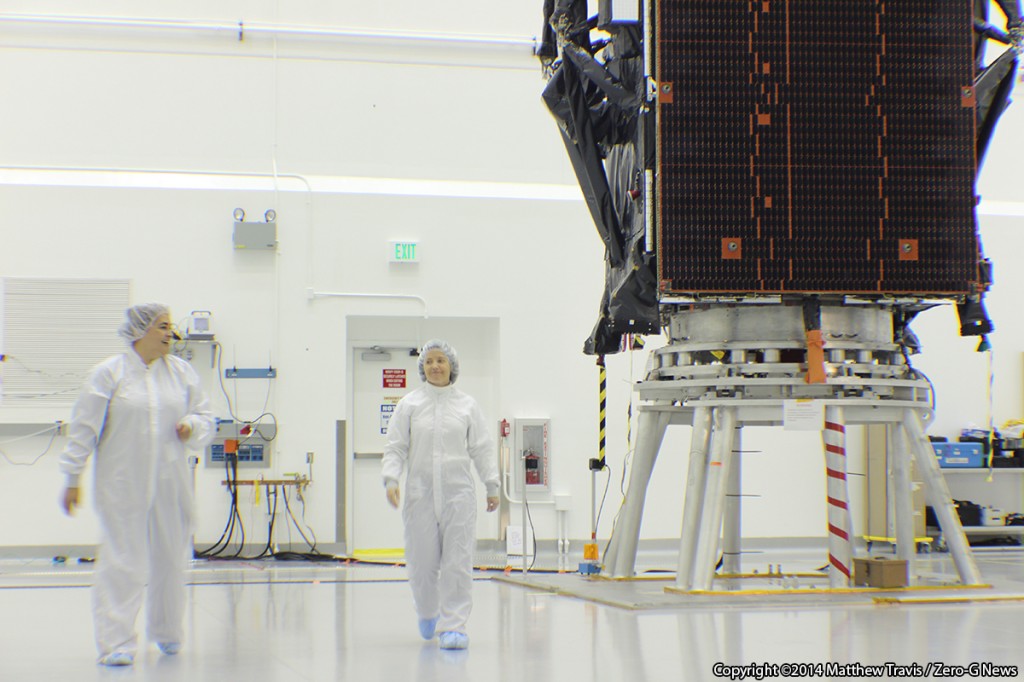
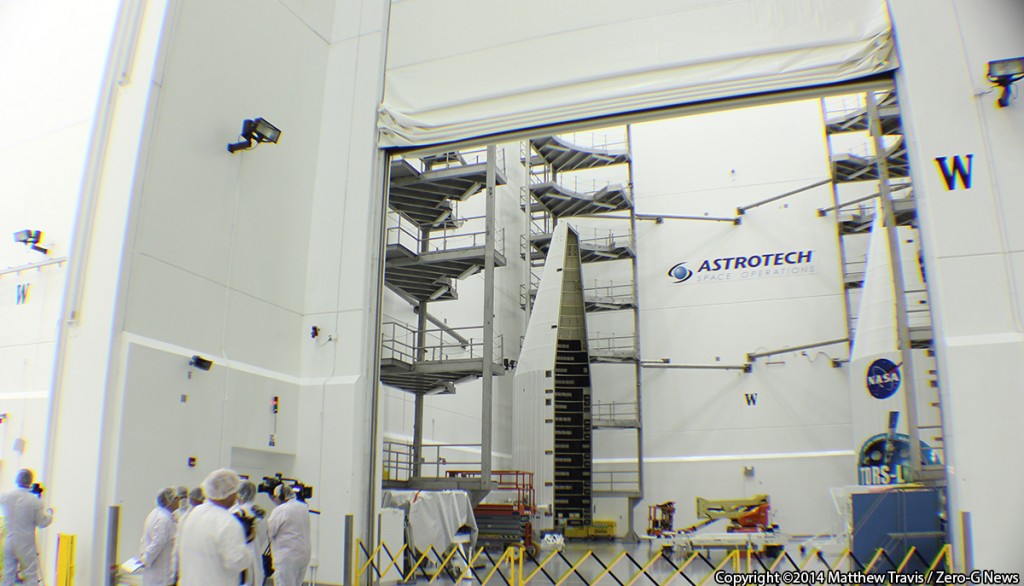
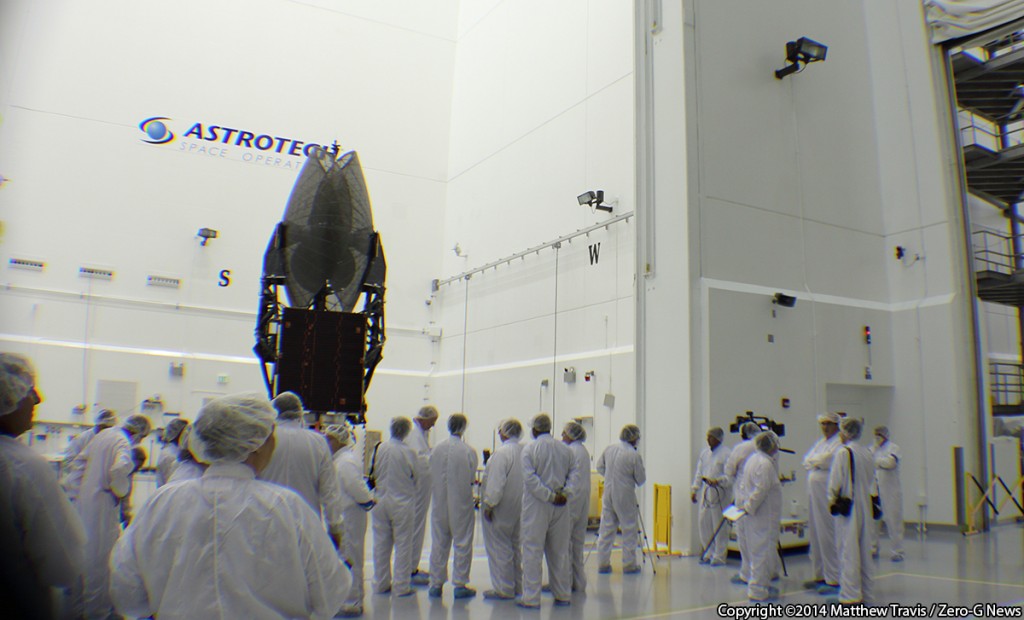
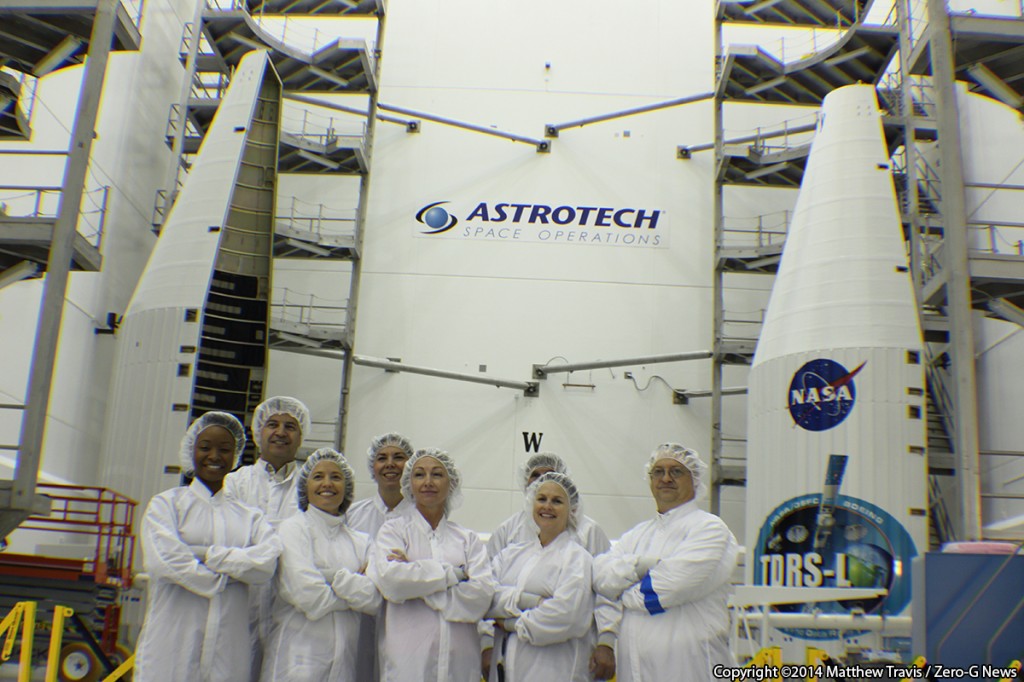
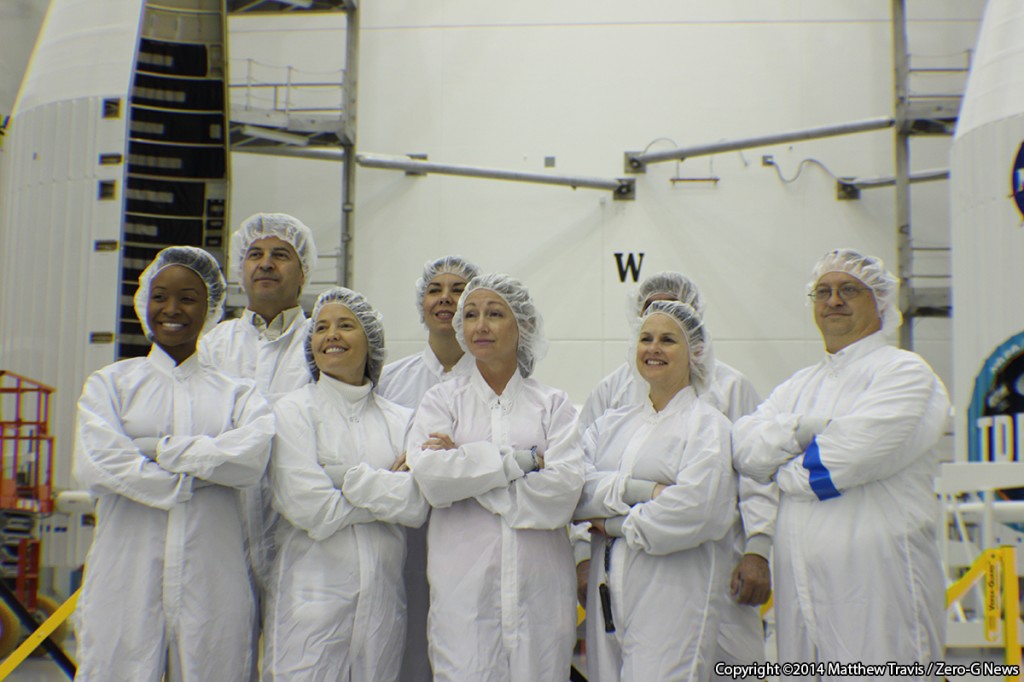
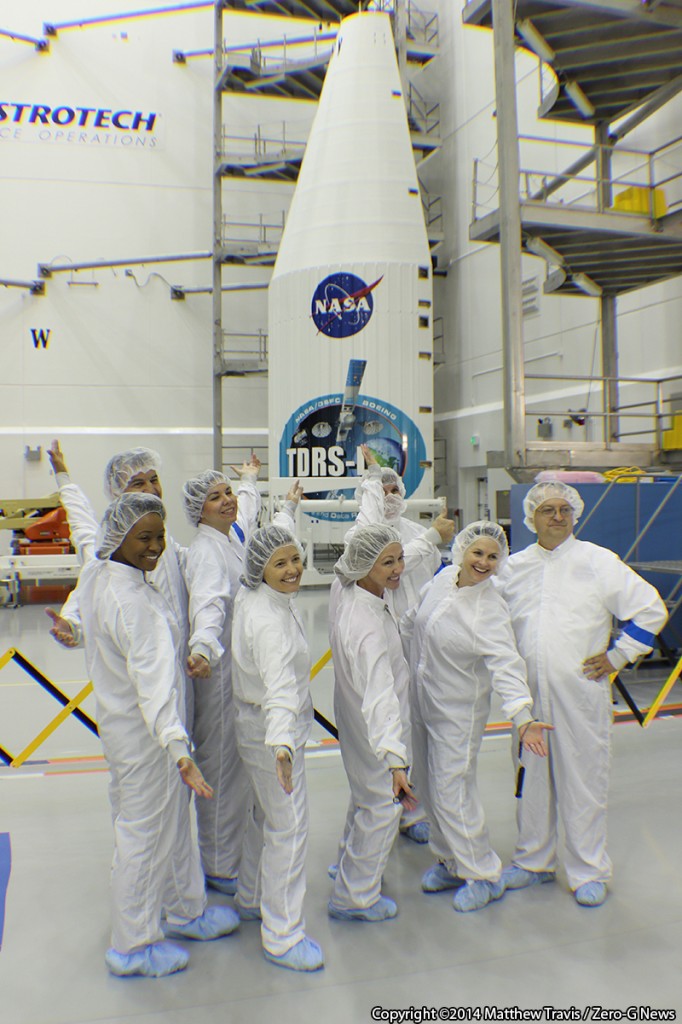
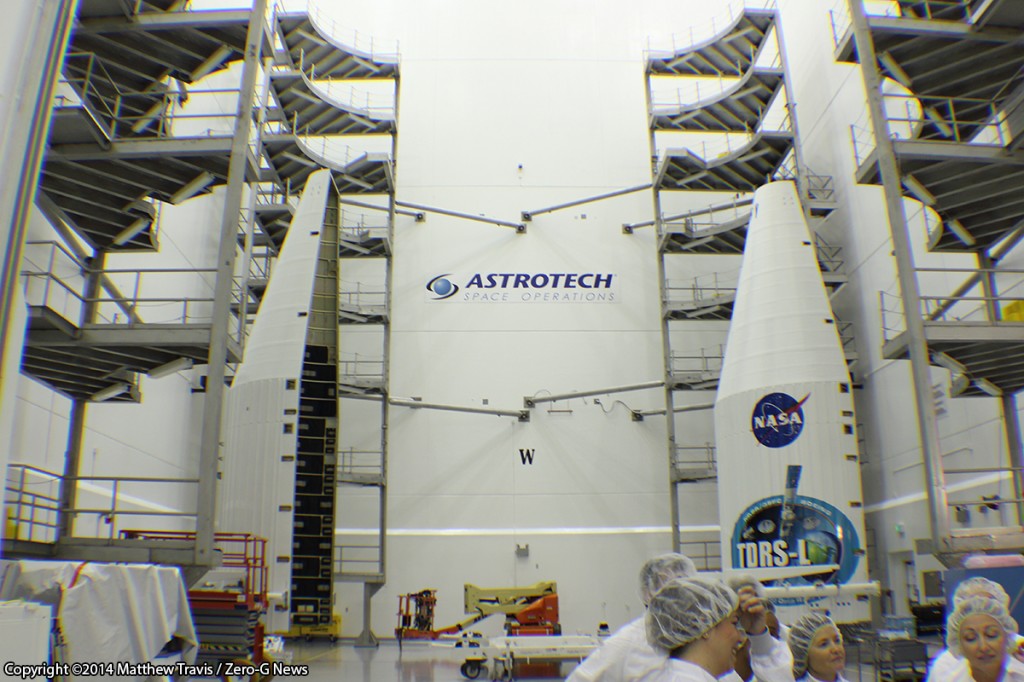
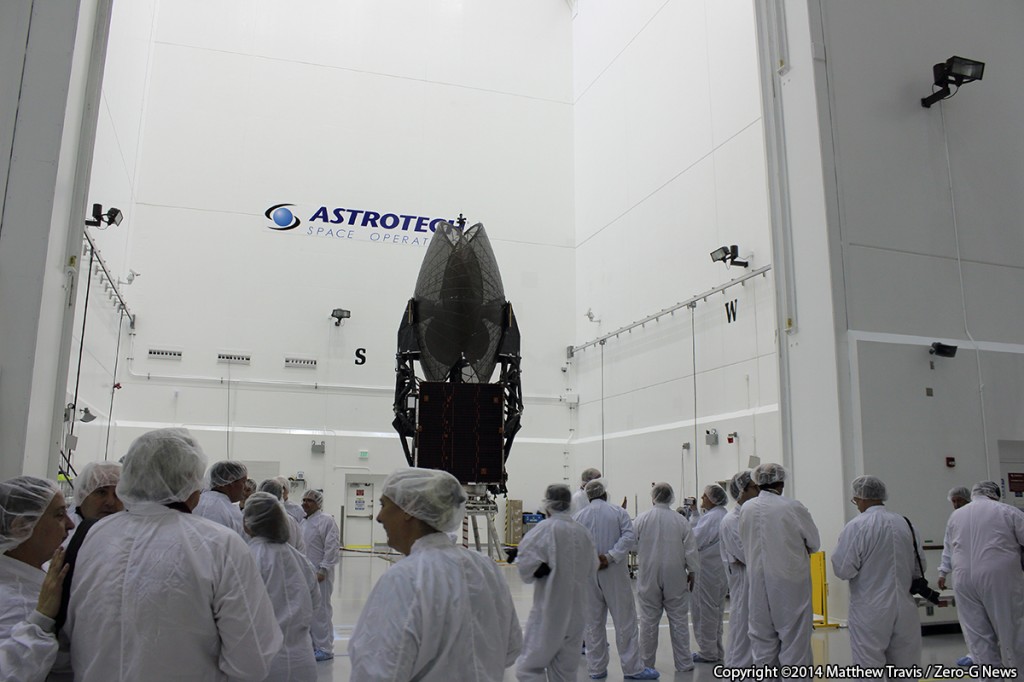
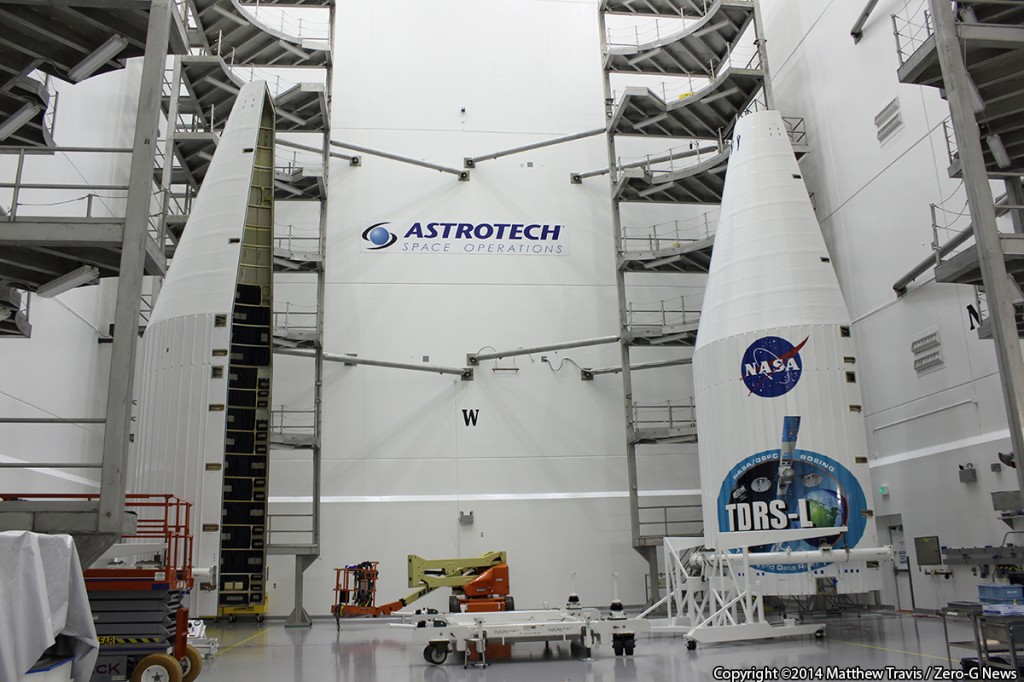
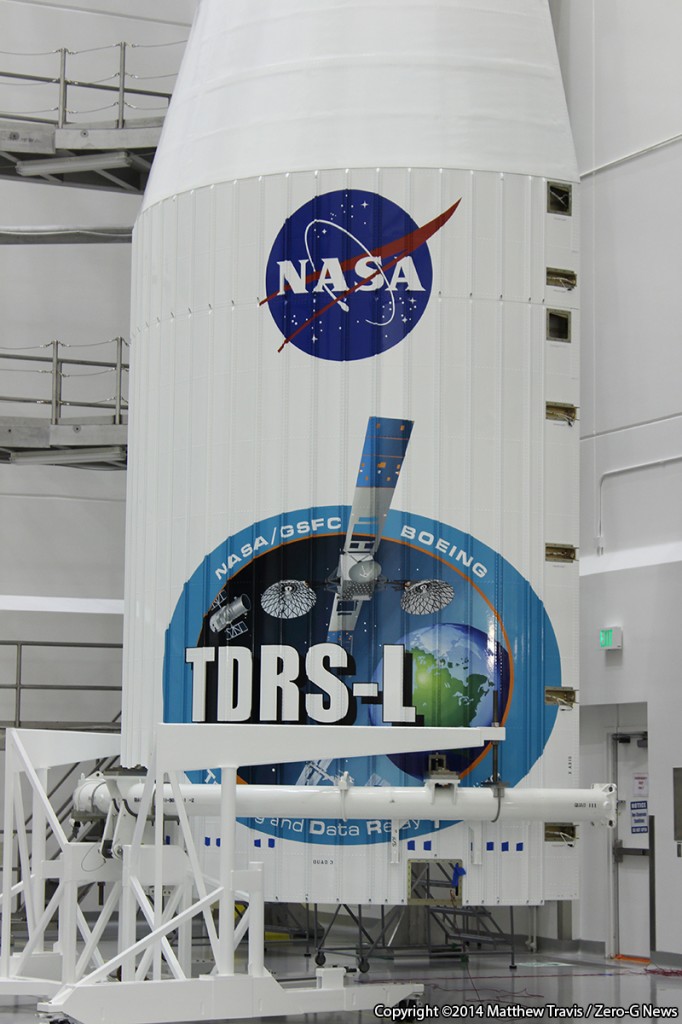
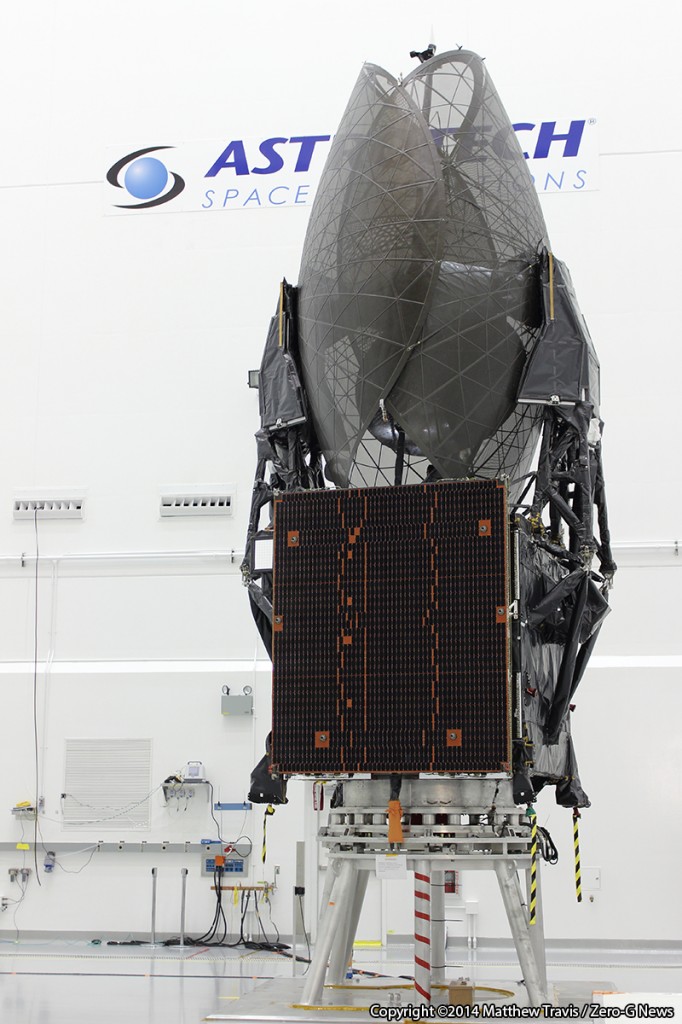
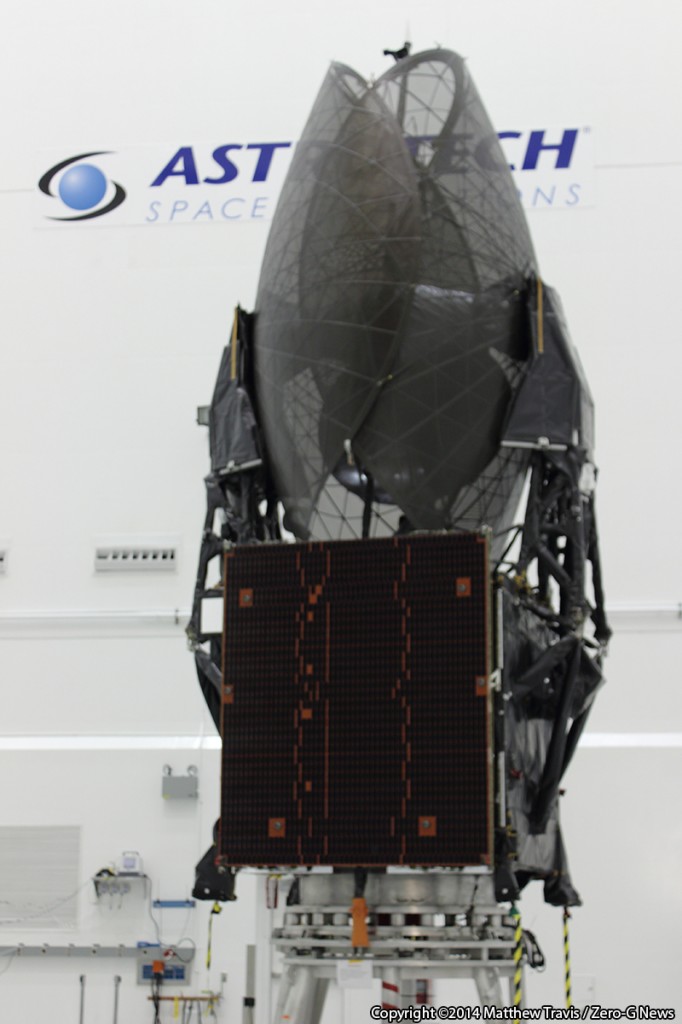
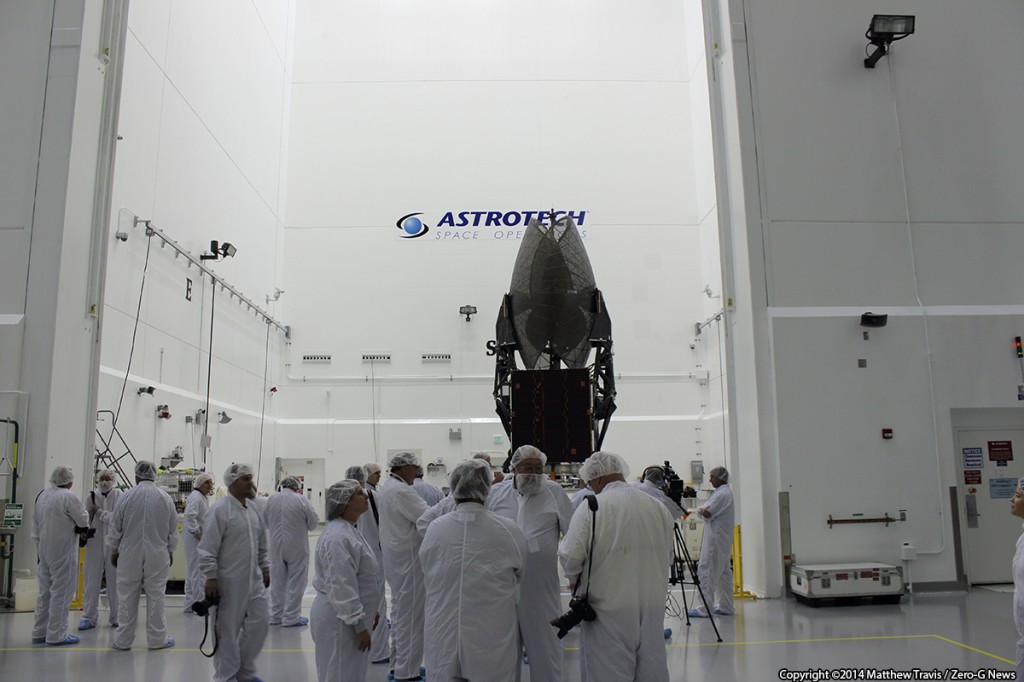
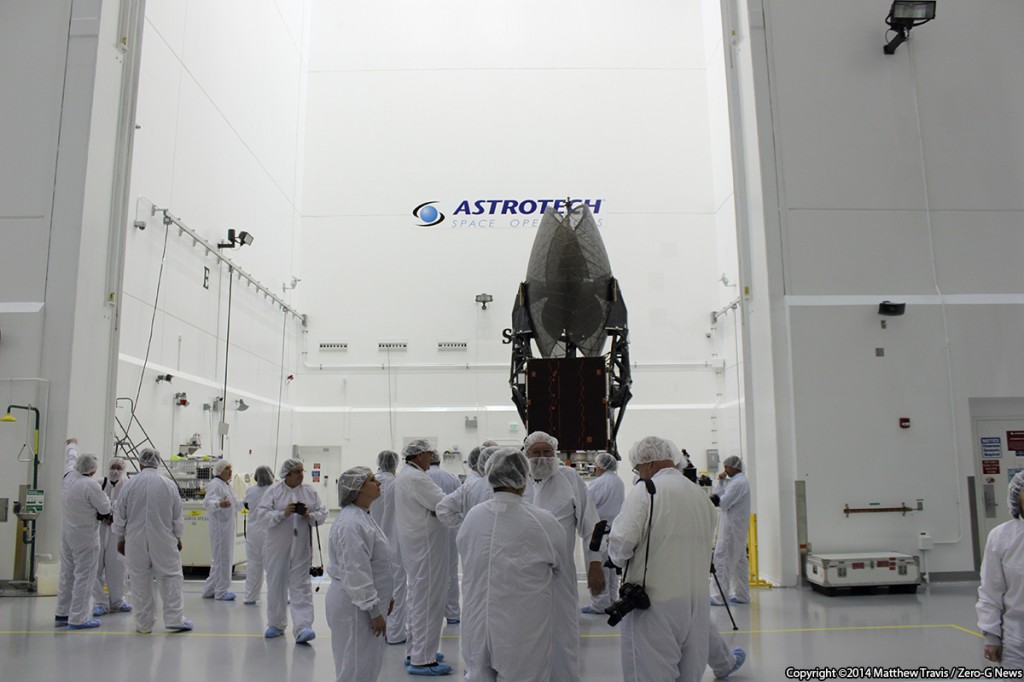
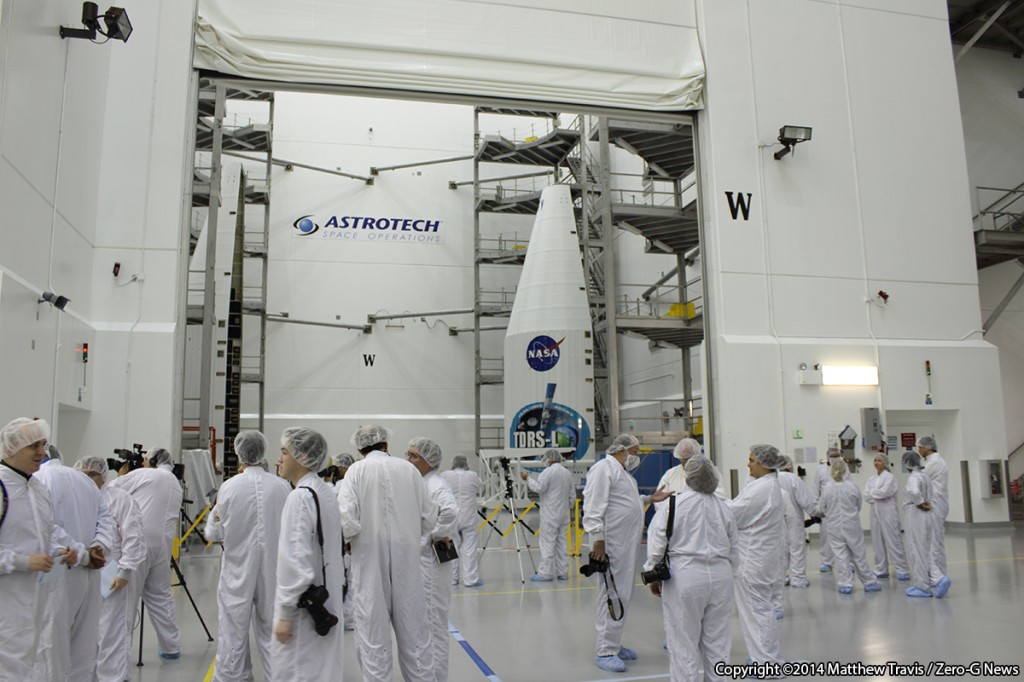
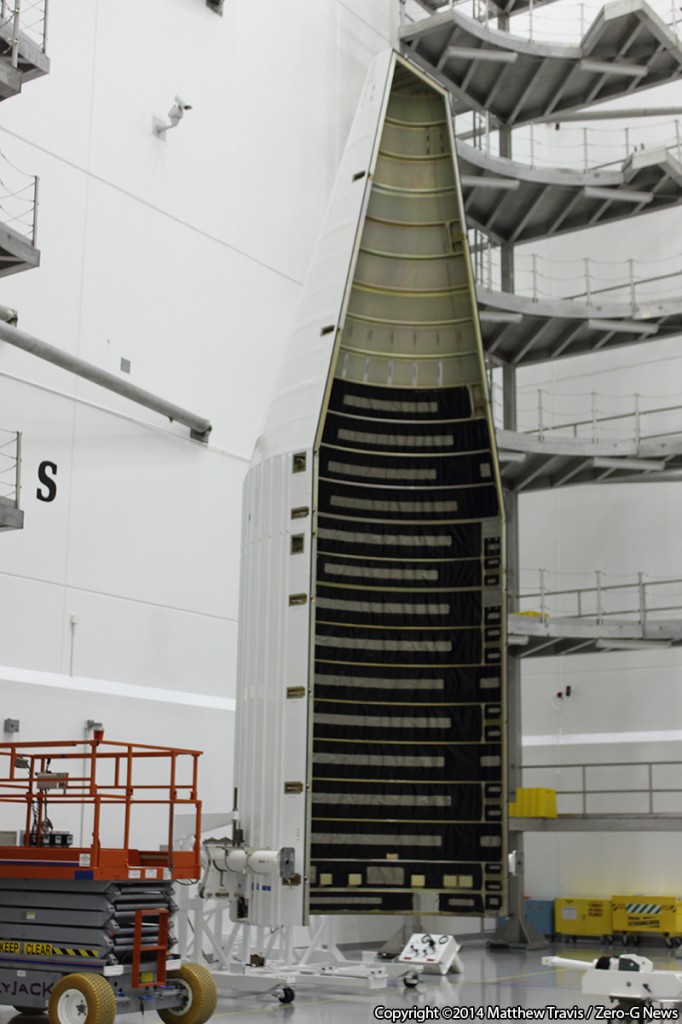
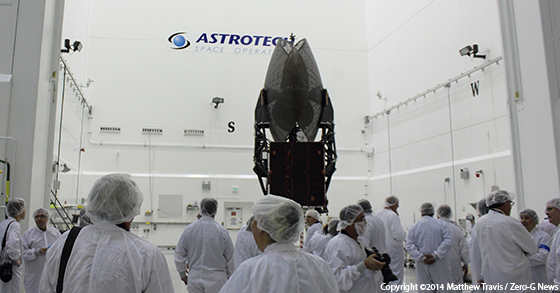
NASA’s Tracking and Data Relay Satellite (TDRS)-L was the focus of a media opportunity Januar 3, at the Astrotech Space Operations facility in Titusville, FL. Media viewed the TDRS-L spacecraft and interviewed project and launch program officials from NASA’s Goddard Space Flight Center in Greenbelt, Md.; the Launch Services Program at the agency’s Kennedy Space Center in Florida; and United Launch Alliance (ULA).TDRS-L is scheduled to lift off on a ULA Atlas V 401 rocket from Cape Canaveral Air Force Station in Florida on Jan. 23 at the opening of a 40-minute launch window that extends from 9:05 to 9:45 p.m.
The TDRS-L spacecraft is the second of three next-generation satellites designed to ensure vital operational continuity for NASA by expanding the lifespan of the fleet, which now consists of eight satellites in geostationary orbit. The spacecraft provide tracking, telemetry, command and high bandwidth data return services for numerous science and human exploration missions orbiting Earth. These include NASA’s Hubble Space Telescope and the International Space Station. TDRS-L has a high-performance solar panel designed for more spacecraft power to meet the growing S-band communications requirements.
All photos by Matthew Travis for Zero-G News.
NASA showed off their newest communication satellite, TDRS-L, to the media yesterday at Astrotech’s spacecraft processing facility.TDRS-L is scheduled for launch on January 23 onboard a United Launch Alliance Atlas V rocket. Photo Credit: Matthew Travis / Zero-G News
NASA showed off their newest communication satellite, TDRS-L, to the media yesterday at Astrotech’s spacecraft processing facility.TDRS-L is scheduled for launch on January 23 onboard a United Launch Alliance Atlas V rocket. Photo Credit: Matthew Travis / Zero-G News
NASA showed off their newest communication satellite, TDRS-L, to the media yesterday at Astrotech’s spacecraft processing facility.TDRS-L is scheduled for launch on January 23 onboard a United Launch Alliance Atlas V rocket. Photo Credit: Matthew Travis / Zero-G News
NASA showed off their newest communication satellite, TDRS-L, to the media yesterday at Astrotech’s spacecraft processing facility.TDRS-L is scheduled for launch on January 23 onboard a United Launch Alliance Atlas V rocket. Photo Credit: Matthew Travis / Zero-G News
NASA showed off their newest communication satellite, TDRS-L, to the media yesterday at Astrotech’s spacecraft processing facility.TDRS-L is scheduled for launch on January 23 onboard a United Launch Alliance Atlas V rocket. Photo Credit: Matthew Travis / Zero-G News
NASA showed off their newest communication satellite, TDRS-L, to the media yesterday at Astrotech’s spacecraft processing facility.TDRS-L is scheduled for launch on January 23 onboard a United Launch Alliance Atlas V rocket. Photo Credit: Matthew Travis / Zero-G News
NASA showed off their newest communication satellite, TDRS-L, to the media yesterday at Astrotech’s spacecraft processing facility.TDRS-L is scheduled for launch on January 23 onboard a United Launch Alliance Atlas V rocket. Photo Credit: Matthew Travis / Zero-G News
NASA showed off their newest communication satellite, TDRS-L, to the media yesterday at Astrotech’s spacecraft processing facility.TDRS-L is scheduled for launch on January 23 onboard a United Launch Alliance Atlas V rocket. Photo Credit: Matthew Travis / Zero-G News
NASA showed off their newest communication satellite, TDRS-L, to the media yesterday at Astrotech’s spacecraft processing facility.TDRS-L is scheduled for launch on January 23 onboard a United Launch Alliance Atlas V rocket. Photo Credit: Matthew Travis / Zero-G News
NASA showed off their newest communication satellite, TDRS-L, to the media yesterday at Astrotech’s spacecraft processing facility.TDRS-L is scheduled for launch on January 23 onboard a United Launch Alliance Atlas V rocket. Photo Credit: Matthew Travis / Zero-G News
NASA showed off their newest communication satellite, TDRS-L, to the media yesterday at Astrotech’s spacecraft processing facility.TDRS-L is scheduled for launch on January 23 onboard a United Launch Alliance Atlas V rocket. Photo Credit: Matthew Travis / Zero-G News
NASA showed off their newest communication satellite, TDRS-L, to the media yesterday at Astrotech’s spacecraft processing facility.TDRS-L is scheduled for launch on January 23 onboard a United Launch Alliance Atlas V rocket. Photo Credit: Matthew Travis / Zero-G News
NASA showed off their newest communication satellite, TDRS-L, to the media yesterday at Astrotech’s spacecraft processing facility.TDRS-L is scheduled for launch on January 23 onboard a United Launch Alliance Atlas V rocket. Photo Credit: Matthew Travis / Zero-G News
NASA showed off their newest communication satellite, TDRS-L, to the media yesterday at Astrotech’s spacecraft processing facility.TDRS-L is scheduled for launch on January 23 onboard a United Launch Alliance Atlas V rocket. Photo Credit: Matthew Travis / Zero-G News
NASA showed off their newest communication satellite, TDRS-L, to the media yesterday at Astrotech’s spacecraft processing facility.TDRS-L is scheduled for launch on January 23 onboard a United Launch Alliance Atlas V rocket. Photo Credit: Matthew Travis / Zero-G News
NASA showed off their newest communication satellite, TDRS-L, to the media yesterday at Astrotech’s spacecraft processing facility.TDRS-L is scheduled for launch on January 23 onboard a United Launch Alliance Atlas V rocket. Photo Credit: Matthew Travis / Zero-G News
NASA showed off their newest communication satellite, TDRS-L, to the media yesterday at Astrotech’s spacecraft processing facility.TDRS-L is scheduled for launch on January 23 onboard a United Launch Alliance Atlas V rocket. Photo Credit: Matthew Travis / Zero-G News
NASA showed off their newest communication satellite, TDRS-L, to the media yesterday at Astrotech’s spacecraft processing facility.TDRS-L is scheduled for launch on January 23 onboard a United Launch Alliance Atlas V rocket. Photo Credit: Matthew Travis / Zero-G News
NASA showed off their newest communication satellite, TDRS-L, to the media yesterday at Astrotech’s spacecraft processing facility.TDRS-L is scheduled for launch on January 23 onboard a United Launch Alliance Atlas V rocket. Photo Credit: Matthew Travis / Zero-G News
NASA showed off their newest communication satellite, TDRS-L, to the media yesterday at Astrotech’s spacecraft processing facility.TDRS-L is scheduled for launch on January 23 onboard a United Launch Alliance Atlas V rocket. Photo Credit: Matthew Travis / Zero-G News
NASA showed off their newest communication satellite, TDRS-L, to the media yesterday at Astrotech’s spacecraft processing facility.TDRS-L is scheduled for launch on January 23 onboard a United Launch Alliance Atlas V rocket. Photo Credit: Matthew Travis / Zero-G News
NASA showed off their newest communication satellite, TDRS-L, to the media yesterday at Astrotech’s spacecraft processing facility.TDRS-L is scheduled for launch on January 23 onboard a United Launch Alliance Atlas V rocket. Photo Credit: Matthew Travis / Zero-G News
NASA showed off their newest communication satellite, TDRS-L, to the media yesterday at Astrotech’s spacecraft processing facility.TDRS-L is scheduled for launch on January 23 onboard a United Launch Alliance Atlas V rocket. Photo Credit: Matthew Travis / Zero-G News
NASA showed off their newest communication satellite, TDRS-L, to the media yesterday at Astrotech’s spacecraft processing facility.TDRS-L is scheduled for launch on January 23 onboard a United Launch Alliance Atlas V rocket. Photo Credit: Matthew Travis / Zero-G News
Introduction: This concept explores the Eastern Range (ER) and Cape Canaveral Air Force Station (CCAFS) being managed as a Federal Aviation Administration (FAA)-licensed commercial launch site (i.e., a spaceport). The concept to be discussed is that launch programs (U.S., commercial, civil, and national security space sector launch and test and evaluation (T&E) programs) would contract […]
Blazing a trail through a cloudy California morning, a United Launch Alliance Delta II rocket successfully deployed NASA’s Soil Moisture Active Passive (SMAP spacecraft into polar orbit this morning on one of the venerable launch vehicle’s final missions. After delays this week due to strong high altitude winds, Delta blasted off at 6:22 a.m. PST […]
NASA and ATK have completed installing the first Space Launch System booster qualification motor, QM-1, in a specialized test stand in Utah. The largest solid rocket motor ever built for flight, QM-1 is now being prepared for its static-fire test, which is scheduled for March 11. “Testing before flight is critical to ensure reliability and […]
 NASA’s Tracking and Data Relay Satellite (TDRS)-L was the focus of a media opportunity Januar 3, at the Astrotech Space Operations facility in Titusville, FL. Media viewed the TDRS-L spacecraft and interviewed project and launch program officials from NASA’s Goddard Space Flight Center in Greenbelt, Md.; the Launch Services Program at the agency’s Kennedy Space Center in Florida; and United Launch Alliance (ULA).TDRS-L is scheduled to lift off on a ULA Atlas V 401 rocket from Cape Canaveral Air Force Station in Florida on Jan. 23 at the opening of a 40-minute launch window that extends from 9:05 to 9:45 p.m.